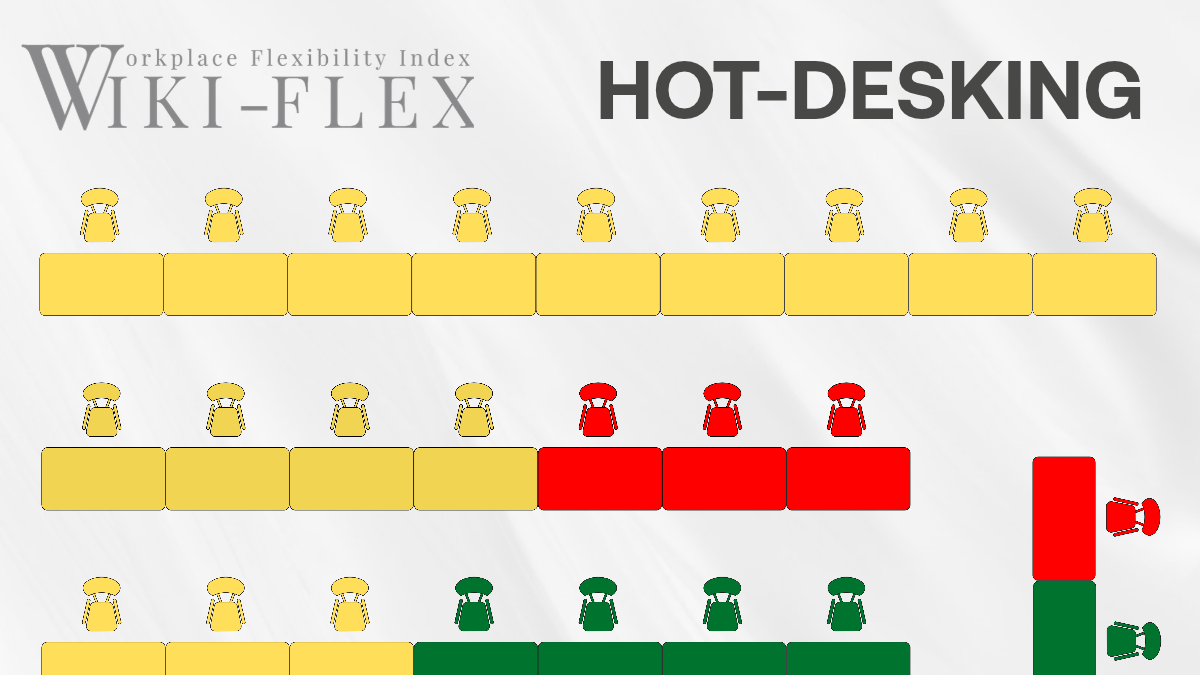
Hot desking is simple to describe: no one owns a desk, and anyone can use any free space. With hybrid work leaving fewer people in the office on any given day, it has become a common way for employers to cut the cost of space.
The term is thought to come from the naval practice of “hot racking”, in which sailors on different shifts share the same bunks. The appeal to employers is similar: why pay for a desk that sits empty for most of the week?
The Case For
The savings can be real. Office space is a major cost for most businesses, and sharing desks can reduce the space needed by up to 30 per cent (to start with). Attendance is also still well below pre-pandemic levels: in December 2025, Kastle Systems recorded its highest weekly average since early 2020, and even that was 56.3 per cent of the pre-pandemic level.
Shared desks can also encourage people to mix across teams, and in a hybrid workplace they make it easier to resize the office as attendance changes.
The Case Against
Many people dislike it. Academic research suggests that it may increase conflict between colleagues and weaken performance on tasks that need privacy and focus. There are practical costs too. Time spent looking for a desk, carrying belongings around and setting up each morning adds up, and the loss of a personal space can leave people feeling less attached to their team.
A Small Price for the Freedom of Flexibility
For employees, hot desking is part of a fair exchange. A desk of one’s own that sits empty for much of the week is what flexible working asks people to give up, and in return they gain days at home, less time spent commuting and more say over how their working week is arranged. Set against that freedom, booking a desk or clearing it at the end of the day is a very small price to pay. Employees who value flexibility must recognise that the two go together: an employer that has to pay for an empty desk for every person will find it much harder to keep offering the choice.
Making It Work
Hot desking works best as part of a well-designed hybrid office, not as a cost-cutting exercise on its own. That means enough desks for the busiest days, lockers and quiet rooms, areas where teams can sit together, and booking that is simple enough not to become a chore.
It also means asking what the office is for. If people come in to collaborate, the space should be built for collaboration, not rows of identical desks. As more employers insist on a return to office, the risk is that they bring people back to a space that no longer fits the way they work, unless it is designed to protect the employer as well as the employee.
A Small Price for the Savings
For employers, the same logic applies. A well-designed system takes the preparation described above (enough desks for the busiest days, lockers, quiet rooms and simple booking). That preparation costs money and management time, but it is a very small price to pay for the savings on rent, energy and upkeep that shared desks bring year after year. Cutting corners is a false economy: a poorly run system drives people away from the office and can cost more in lost goodwill and productivity than it saves in space.
The Problem: Hot desking saves space, but not for free. Measure the savings and the costs before deciding.