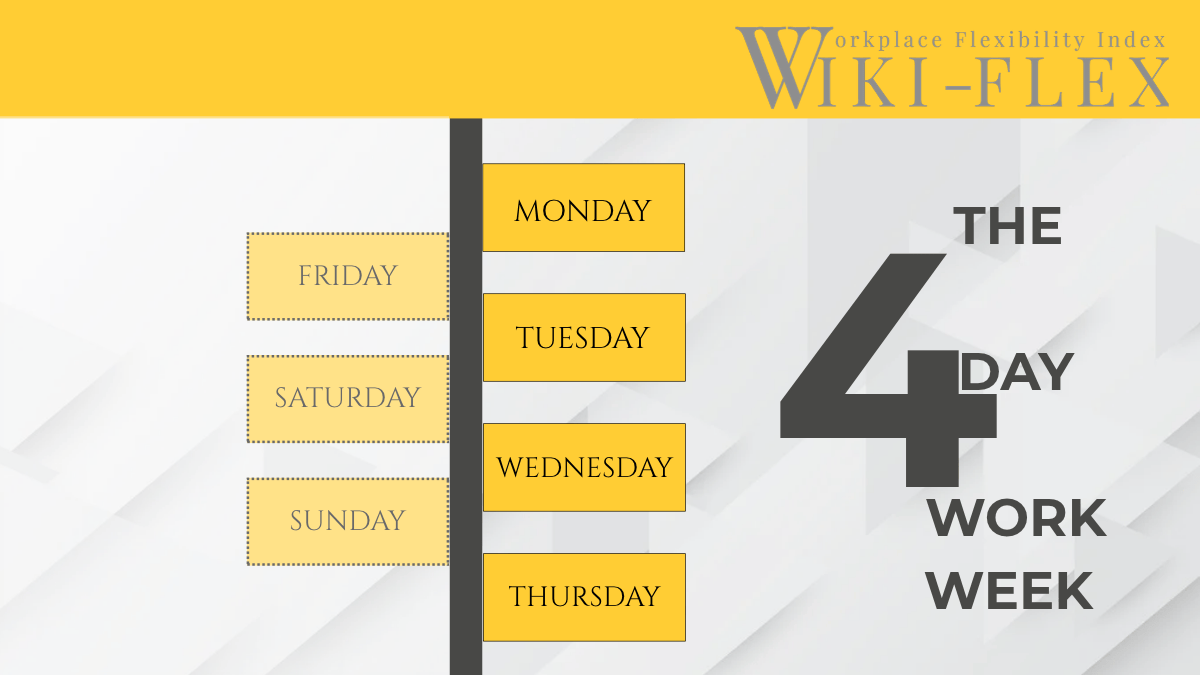
The four-day work week has moved from a fringe idea to a serious proposal. Companies and governments in a number of countries are now testing it.
It belongs to a wider shift towards workplace flexibility: giving people more control over when, as well as where, they work. The question for employers is no longer whether a shorter week is possible, but under what conditions it works.
What the Trials Found
Iceland ran some of the earliest large trials, between 2015 and 2019. About 2,500 workers, more than 1 per cent of the country’s working population, moved to a 35 or 36 hour week with no cut in pay. Productivity and service provision stayed the same or improved in most of the workplaces involved, and around 86 per cent of Iceland’s workforce has since moved to shorter hours or gained the right to do so.
A larger private-sector trial followed in the United Kingdom. Between June and December 2022, 61 companies and around 2,900 workers took part. At the end, 56 of the 61 companies (92 per cent) continued with the four-day week, and 18 made it permanent. Revenue rose by 1.4 per cent on average over the trial, 71 per cent of employees reported lower levels of burnout, and the number of staff leaving fell by 57 per cent.
Not One Model but Several
“Four-day week” can mean very different things, and the difference matters for anyone designing a hybrid workplace. In the trials above, people worked fewer hours for the same pay. Belgium took another route: since its 2022 labour deal, employees can ask in writing to work their normal full-time hours over four longer days, and an employer who refuses has to explain why in writing.
Tokyo’s metropolitan government began offering its employees a four-day week from April 2025, with the governor, Yuriko Koike, saying the aim was that no woman should have to give up her career because of childbirth or childcare. In India, the Labour Ministry clarified in December 2025 that the new labour codes allow up to 12 hours a day over four days followed by three paid days off, as long as the week does not exceed 48 hours, and that this is an option rather than an obligation.
What It Takes
The trials share a common lesson: the fifth day is not free. It has to be earned by removing low-value meetings, tightening processes and agreeing what good output looks like. Compressed hours carry their own risk, because four 10- or 12-hour days can wear people down, especially in demanding or safety-critical roles.
Where people split their time between home and the office, a shorter week also has to fit alongside office days, so the two policies need to be designed together rather than bolted on one after the other.
Done well, a four-day week is not a perk but a better way of organising work. It gives people real time back, which is why it belongs in any serious conversation about work-life balance.
The Problem: A four-day week introduced without redesigning the work simply squeezes five days into four. The trials that succeeded treated it as an operational change, measured it and adjusted as they went.