As the economy begins recognising and utilising remote and hybrid work models as fundamentally better, there has also been much discussion on the benefits for businesses and employees.
But the benefits to society as a whole haven’t received their fair share of discussion.
Let’s look at this aspect.
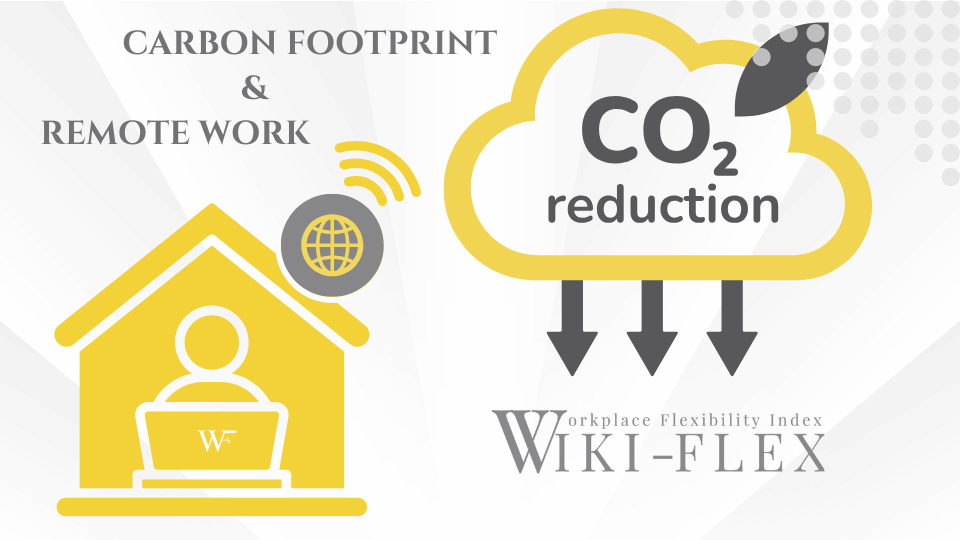
Starting with the impact of remote and hybrid work on the human carbon footprint.
The most obvious impact here would be the massive reduction in carbon footprint by cutting emissions from billions of hours of daily commutes. However, the impact is much larger than just the traffic emissions. Much, much larger. We will touch upon that too.
The Reduction in Commute:
It is a no-brainer that regular office commute and the carbon emissions that come with it have a direct relationship with climate change.
One of the most dominant global issues at the moment, climate change negatively affects, among many other things, individual health, weather and food production.
Let’s look at one tiny microcosm. In 2021, research from Spain’s Institut de Ciència i Tecnologia Ambientals estimated that if 40 per cent of service-sector employees in Barcelona worked remotely four days a week, the fall in traffic would cut nitrogen dioxide (the main pollutant generated by traffic emissions) by 10 per cent. If these are the numbers for just one city, the wide-scale positive impacts on a global level will lead to massive improvements. It may not immediately feel so, but 10 per cent is a massive contribution, and the same cut in traffic cuts carbon emissions too.
Now let’s look at how this impact rolls down.
Impact of Reduction in Commute – Change in the Buying Pattern for Cars:
If the need for commute reduces considerably on average, and people use public transport as and when they need to go on-premises, why, after all, would people need and buy more private motor vehicles or replace existing ones so often? In another microcosm in the context of the United States, KPMG estimates that as more people work from home and shop online, 14 million fewer cars may be needed because people will drive less. Fewer cars mean lower carbon emissions. This shift in the buying pattern will, of course, bring a change in the vehicle sales sector.
Impact of Reduction in Commute – Change in Public Transit:
With people and companies operating remotely, there will be reduced congestion on the roads and highways. A 2021 report by the Department of Transportation predicted that in the US only air travel would return to its pre-pandemic level by 2024.
Other modes will remain lower and public transit will see a permanent shift which will be a positive result as far as carbon emissions are concerned. This change will also trigger a reduction in the construction of infrastructure related to public transport and the millions of tonnes of material that is part of the process.
Impact of Change in the Car Sales and Public Transport – Reduction in Mining Ore:
With a change in vehicle sales and vehicles needed for public transport comes a lowered need for materials such as metal and steel that are widely utilised inputs in the auto manufacturing business. These materials are produced from iron ore, and if their requirements are diminished, there will be a direct reduction in mining. Less mining would mean lower carbon emissions, and other harmful consequences to groundwater, soil and natural landscapes will also be minimised. Mining is also often directly linked to deforestation and soil erosion in several areas. Add these to the carbon positive benefits of a remote or hybrid workplace.